
Can’t Afford Your Car Loan or Lease? Behind on Payments? What are Your Options?
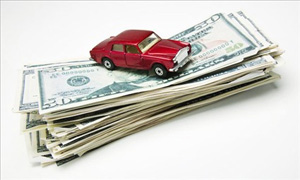 Missed car payments or danger of repossession? What you can do when you can no longer afford your car loan or lease?
In a tough economy, it is often a struggle to make car payments. Many people find themselves in a situation in which they are behind on car payments and can no longer afford their car — or can’t afford payments to buy another car.
Cars are being repossessed and returned to banks and finance companies at an alarming rate. Even when people can no longer make payments and voluntarily return their cars, they find it doesn’t solve their problems. In fact, it often makes the problem worse. Problems are especially acute for people with upside down loans – they owe more than their car is worth.
To stop making payments on a car loan or lease, or having missed a series of payments, puts the car loan or lease in “default.” The definition of “default” can vary between lenders, but it is always explained in the loan contract. The contract defines the conditions under which a loan goes into default and what can happen as a result.
Let’s take a look at the problem and examine some possible solutions.
Refinancing your car loan or lease
Many people feel that if they could just get a little lower monthly payment, they could keep their car and continue paying off their loan or lease. One way, they feel, is to refinance their loan or lease. It seems to work with home mortgages, so why not car loans?
It’s important to understand that refinancing a car loan (or home mortgage) is not simply a matter of the bank or loan company changing the interest rate or other factors. It means getting a new loan to pay off and end an old loan. Or a new loan to pay off and end an old lease. Leases cannot be refinanced, although lease finance companies may be willing to make adjustments to payments if asked.
Unless loan interest rates have changed significantly since you bought your car (rates change very slowly), or your credit score has improved significantly (which might get you a better interest rate), or you extend the length (term) of your loan by another few years (do you really want to be still paying on an old car years from now?), refinancing your car loan may not affect your monthly payment significantly enough to make it worthwhile. But you should investigate anyway because every situation is different.
If you bought your car brand new and your loan was a new-car loan, any refinance loan now will be a used-car loan, with higher down payment requirements and interest rates.
Where to refinance a car loan?
Getting a used-car refinance loan is like getting any other used-car loan. Banks, credit unions, and online car loan companies such as Auto Credit Express offer them. Getting a quote is free and gives you a chance to determine if you’ll benefit from refinancing, even if you have bad credit.

We already mentioned that your credit score is the most important factor that will affect your ability to get a refinance loan and will determine how much interest you’ll be charged. Therefore, it is important that you know your credit score prior to applying for a loan.
Get a Dark Web Scan and your Experian Credit Report for FREE!
They show you the same credit information that car dealers and loan companies already know about you.
Trading for a cheaper car
If you can’t afford your current car payments, you could consider trading for a cheaper car. This might work if your current loan payments are too high and you would like to trade down to a less expensive car to lower those payments. It works best if you are not “upside down” — if you don’t owe more on your loan than your car is worth as a trade vehicle. Your dealer takes your old car, pays off your loan, and applies the remaining “equity” as a down payment on your new car. If your new car is less expensive than your old car, then you have an excellent chance that your new payments will be lower than your old payments.
However, most people in this situation are upside down — they owe more on their loan than their car is worth. They have negative trade equity. Trading to buy a cheaper car may not, and probably will not, result in lower monthly payments. The negative equity from the old loan is added to the cost of the new car, which means the new car may not be so cheap after all, and monthly payments will likely be higher than before. Furthermore, a bank or loan company will not approve a loan amount greater than the value of the car, unless the dealer can somehow “hide” the negative equity from them. Otherwise, a large cash down payment would be required.
However, this technique could work if the amount of negative equity is relatively small, the price of the new car is significantly less than the old car, and the new loan is longer than the remaining time on the old loan.
Again, this rarely works for leased cars. Although dealers might try to convince customers otherwise, trading a leased car is almost never a good idea and will almost never solve affordability problems.
Selling your car to buy a cheaper car
Although you get more money by selling than by trading, the same issues apply. If you are upside down on your car loan, the selling price won’t cover your loan, and you would have to add cash to make up the difference to pay off the loan, to get the title to give to the buyer. Then you would have to come up with more cash or a loan to buy another car. This can be difficult or impossible for most people who are already in a tough financial situation.
If you are not upside down, selling your car is much easier. You can sell your car and use part of the sale money to pay off your loan. You could then use the remaining money as a down payment on a cheaper car — and lower monthly payments.
If you need a cheaper new car, try an Online Pricing Service such as Car Deal Finder that provides discounted dealer prices that include any manufacturer discounts and rebates. This free service also provides you a no-haggle low price quote on the car you want.
Can I change my car loan to a lease to get lower payments?
Short answer: No. Long answer: Finance and loan companies can’t simply change a loan to a lease. Theoretically, you could accomplish your objective by getting a new lease to pay off your old loan, and enjoy much lower payments. However, since the recent recession, there are no longer any finance companies who will provide a lease on a used car. This wasn’t true as recently as a few years ago, but it’s true now. It might change in the future when the current credit crunch is over.
What if I just can’t make my car payments?
If you can no longer make your car payments, or debts have closed in on you, and you have missed payments, your car is in danger of being repossessed. State laws partly define what is considered a “default” that allows a repossession, and it differs between states and finance companies. The definitions are spelled out in your loan or lease contract, in the fine print. If you have defaulted, your bank or finance company has the legal right to come take (repossess) your car. Laws also determine how, when, or if you are to be notified.
What happens if my car is repossessed?
If you have missed a series of car payments the bank or finance company exercises its right to repossess your car and hires a “repo” or “recovery” company to find and pick up the car without notifying you in advance. The car is soon sold at a wholesale car auction.
A judgment will be filed against you in court and you will be sued for your loan balance, minus the amount received from the car sale. You could owe thousands of dollars, plus repo fees, storage fees, and administration fees. But the worse part is that your credit record will now show the repossession, and will damage your ability to get new loans or other credit for up to seven years. Furthermore, you have no car — and almost no chance of getting another loan for another car. Not a good situation to be in.
You could voluntarily turn in your car to your bank or finance company (not your dealer) but it is still considered a repossession with all the same issues. The only thing you avoid are the repo man’s fees.
If you currently have a good credit score, you should take extra measures to avoid a repossession. If you don’t know your credit score, you should get it before you make your decision.
Get your Experian Credit Report FREE at freecreditreport.com.
How to avoid a repossession
As soon as you know you are going to have problems making your car payments, contact your bank or finance company immediately. Don’t procrastinate. Don’t be embarrassed. Just do it. The bank or finance company does not want your car back. They will do everything within reason to help you keep your car.
If you are already late with payments or have missed payments, contact your lender immediately. Don’t wait for the repo man. It will be too late. Once your car is repossessed, the only way to get your car back is usually to pay off the entire remaining loan or lease balance – in cash — no more monthly payments. Some lenders might be a little more lenient and allow you to catch up on payments, but don’t count on it.
We’ve heard some people say, “Let them repo my car, my credit is terrible anyway.” Or “I’ll just turn in my car to the dealer and walk away.” That’s not very smart. First, you will still owe your loan balance (plus repo fees), you’ll have no car, and your credit will be damaged so badly that you won’t be able to get another loan for seven more years.
You should do anything and everything possible to avoid a repossession. Get a second job, borrow money from family, work with your bank or finance company, sell stuff you own, but try every possible solution before allowing a repo.
An idea that might work – short sale
It’s done with homes that are in danger of being foreclosed on and, to a lesser degree, done with car loans in danger of repossession. It applies to loans that are upside down — you owe more than the car is worth. It’s called a short sale. It works best if your car loan is with a local bank or credit union, not so well with a carmaker’s finance company such as Honda Finance or Ford Credit.
Here’s how a short sale works.
Explain to your bank why you will no longer be able to afford your car and that a repossession is unavoidable if you don’t get help. Ask them to allow you to sell the car for a fair market price (check with www.kbb.com and www.nadaguides.com) and agree on a price. Even though the agreed-to sale price doesn’t fully cover your outstanding loan, the bank agrees to write off the balance and close the loan. In most cases, your credit is not affected but you should ask the bank about it. You may have to pay income tax on the write-off amount since it is considered a kind of gift from the bank. You would pay the tax at the time you normally file your tax return. The bank would send you an IRS Form 1099 to file with your return.
Don’t expect this tactic to work in all cases. The reason it can work is that, if you sell the car yourself instead of turning it in to the bank, the bank gets more money than if the car is repossessed and sold at a wholesale dealer auction. Some banks will be willing, and some won’t.
With a lease, try a lease transfer
If you can no longer afford your lease and need to get out of your car, consider a lease transfer, usually called a lease assumption. With the lease company’s permission and assistance, you transfer your lease to someone else who will take your car and complete your lease. It is a relatively easy process and is not nearly as expensive as an early lease termination. Here is an article that provides more details: Terminate Car Lease.
Summary
If you are having problems making your car payments, try to avoid a repossession in every possible way. There are solutions that might work for you and allow you to sidestep the awful and long-lasting problems of a repo.